
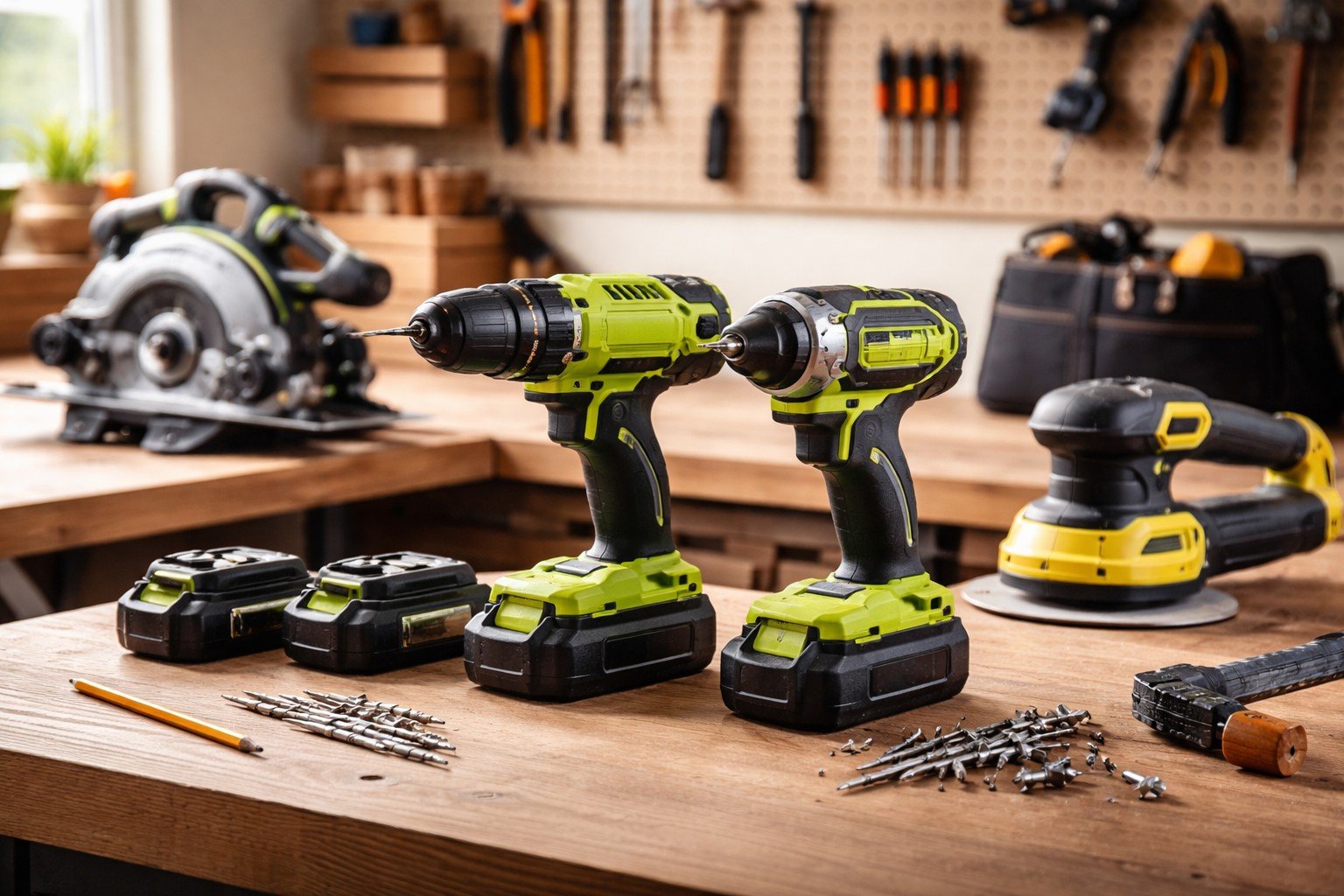
I remember standing in the power tool aisle during my first home renovation, completely paralyzed by choice. There were drills, saws, sanders, and nailers in every conceivable color and price range.
I had no idea what I actually needed versus what the enthusiastic sales associate wanted me to buy.
That confusion costs beginners thousands of dollars and fills garages with tools that never leave their boxes. What are the essential power tools for DIY home improvement for beginners?
You don’t need an overwhelming collection of equipment to improve your home.
You need the right tools that you’ll actually use, tools that make sense for your budget and skill level.
Whether you’re flipping your first property, tackling renovations to increase your home’s value, or just tired of paying contractors for simple projects, having a solid foundation of power tools changes everything. What seems impossible on Monday becomes a finished project by Saturday.
Affiliate Disclaimer: This post may contain affiliate links, meaning we earn a commission if you purchase through them – at no extra cost to you. We only recommend products or services we believe add value to our readers.
Understanding What Makes a Power Tool Actually Essential
The power tool industry thrives on making you believe you need everything. Walk into any hardware store, and you’ll find tools designed for incredibly specific applications that might never apply to your projects.
I’ve watched friends spend thousands building workshops that rival professional contractors, only to use three tools regularly.
Real versatility determines what belongs in a beginner’s toolkit. A cordless drill can make holes, drive screws, mix paint, buff surfaces with attachments, and even remove rust with the right accessories.
That versatility separates essential from optional.
One tool, dozens of applications, minimal garage clutter.
Ease of use matters exponentially more for beginners than professionals. Tools requiring extensive practice before producing acceptable results lead to frustration and abandoned projects.
Cordless options consistently outperform corded choices for beginners because convenience trumps marginal performance differences.
No extension cords creating trip hazards, no searching for outlets, no limitations on where you can work.
Budget alignment determines sustainability. Tools you can actually afford encourage consistent use and project completion.
Mid-range options from reputable brands offer excellent value without the premium price tag of professional-grade equipment.
You’re learning, experimenting, and improving your property, not building houses for clients.
Battery platform compatibility deserves serious attention during your initial purchases. Choosing tools that share the same battery system saves thousands over time.
Instead of maintaining separate chargers and batteries for each tool, you invest in a single ecosystem.
Buy a drill with two batteries today, purchase a circular saw as a tool-only tomorrow, and suddenly you’ve got three batteries rotating between two tools.
Durability and manufacturer support confirm your tools last through many projects. Brushless motors extend lifespan and improve efficiency.
Quality construction means tools withstand the inevitable drops and bumps that come with DIY work.
Manufacturer support confirms that replacement parts are available when needed.
The Foundation: Cordless Drill and Driver
I’ll be really direct here. If you own exactly one power tool, it should be a quality cordless drill.
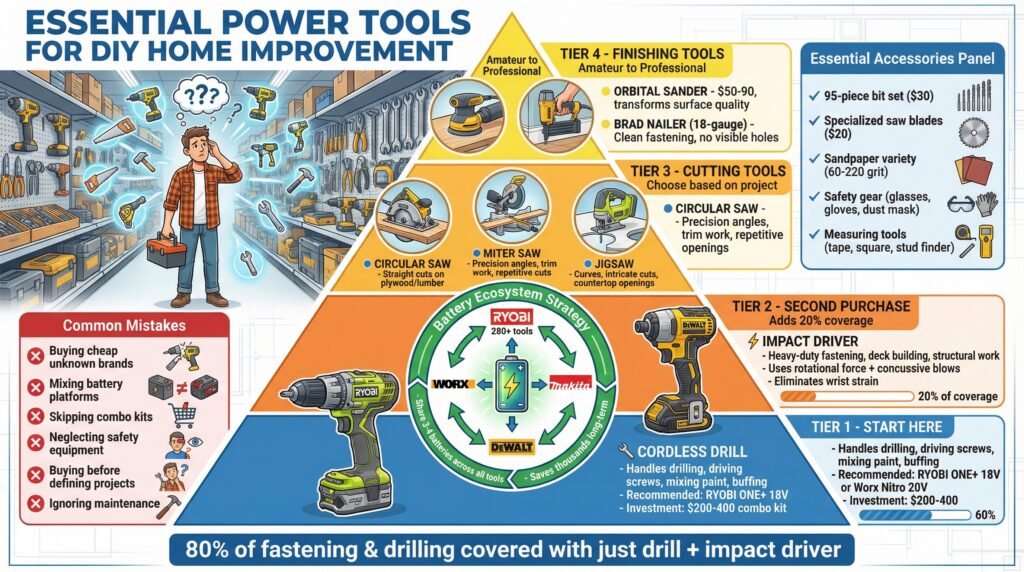
This single tool handles probably 60% of projects most homeowners tackle.
Hanging shelves, installing fixtures, assembling furniture, and light construction work, the applications never end.
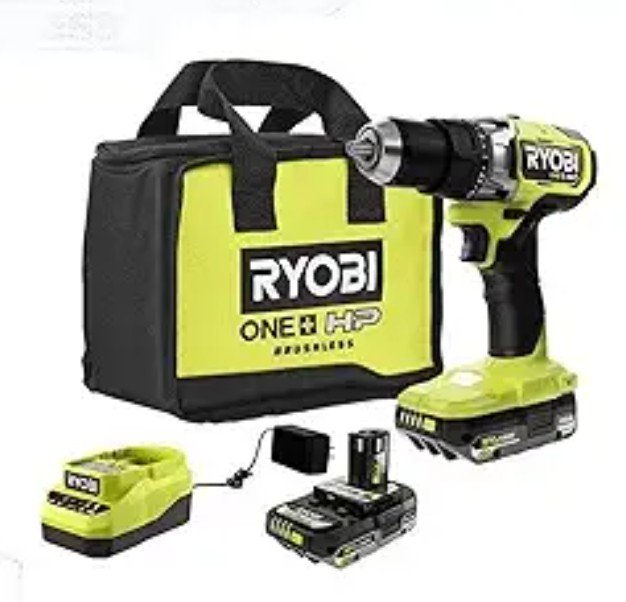
The RYOBI ONE+ 18V system and Worx Nitro 20V represent two excellent entry points for beginners. RYOBI emphasizes battery platform expansion.
Once you own one RYOBI tool, adding others becomes genuinely economical because you’re only paying for the tool body, not redundant batteries and chargers.
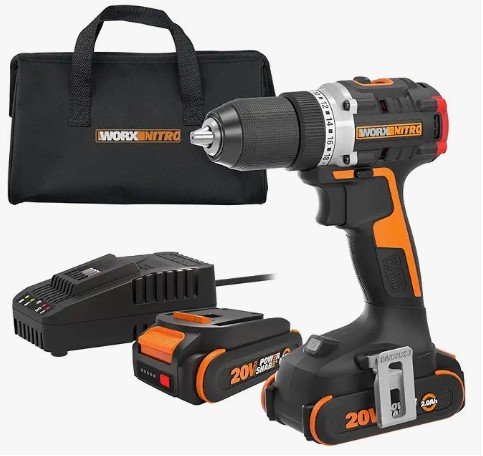
Worx offers similar compatibility across its Power Share product line.
Both deliver adequate torque for beginner and intermediate projects. The Worx Nitro provides 500 inch-pounds of torque, which sounds technical but practically means you can drive screws into hardwood without straining.
Variable speed settings let you work precisely when installing delicate fixtures or powerfully when drilling through studs.
The real advantage emerges over the years, not days. The battery ecosystem you choose today determines your tool budget for the foreseeable future.
Pick the platform aligned with your projected projects.
Research what other tools each manufacturer offers in their cordless lineup. If you anticipate doing lots of lawn care, RYOBI’s extensive outdoor equipment lineup might matter.
If you focus primarily on interior renovations, either platform works excellently.
A quality bit kit matters immediately. Spend an extra twenty dollars on a comprehensive 65-piece or 95-piece drill and driver bit set.
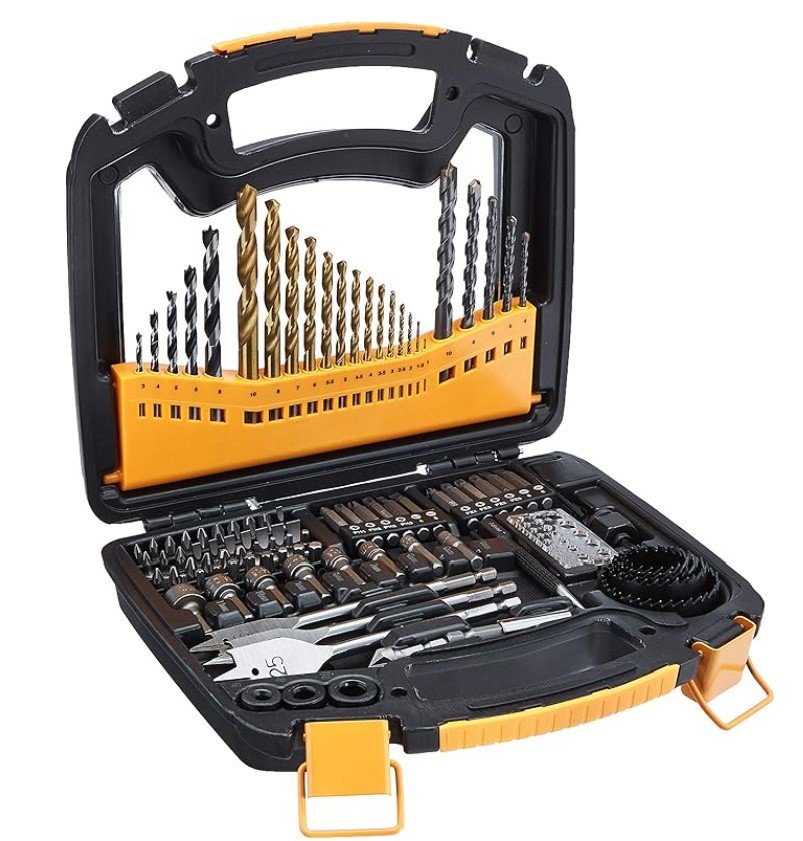
This small investment prepares you for virtually any material or fastener you’ll encounter.
Nothing kills project momentum like discovering you need a specific bit size and having to make an emergency hardware store run.
Impact Driver for Heavy-Duty Fastening
Most beginners initially dismiss impact drivers as redundant when they already own a drill. Try building a deck with just a regular drill, and you will regret not having an Impact Driver.
Impact drivers use rotational force combined with concussive blows, making them vastly superior for demanding applications.
The practical difference becomes obvious when driving long screws or lag bolts. A regular drill needs you to apply substantial physical force to prevent the bit from coming out or the screw from stripping.
You’re pushing hard against the drill while simultaneously controlling direction and depth.
Exhausting and imprecise work.
An impact driver eliminates this struggle. The tool itself provides the force through rapid rotational impacts.
You simply guide it.
This makes deck building, structural projects, and any work involving substantial fasteners genuinely enjoyable instead of frustrating.
Cordless options justify their cost through convenience. Even on tight budgets, the freedom of movement matters.
You’re not managing extension cords while balancing on a ladder or working in tight spaces.
The investment pays back through reduced frustration and faster project completion.
If budget constraints force you to choose between a drill and an impact driver initially, start with the drill. But make the impact driver your second purchase, especially if you anticipate any structural work or outdoor projects.
The combination of both tools covers probably 80% of fastening and drilling applications.
Cutting Tools: Circular Saw, Miter Saw, and Jigsaw
Cutting tools separate beginners who tackle ambitious projects from those stuck with basic repairs. The challenge comes from understanding which saw serves which purpose.
Buying all three simultaneously wastes money.
Buying the wrong one first can be frustrating.
A circular saw makes clean, straight cuts on plywood, lumber, and sheet goods. Portable, relatively affordable, and handles the heavy cutting required for building shelves, constructing simple furniture, and general renovation work.
The RYOBI ONE+ 18V cordless models in 6.5-inch or 7.25-inch sizes work excellently for beginners.
Cordless operation matters here because you’re often cutting large materials, where mobility is truly important.
The advantages of jigsaws for straight cuts become immediately obvious. Circular saws are more forgiving and need less practice to achieve quality results.
Set your cutting guide, start the saw, and follow the line.
Jigsaws demand steadier hands and more technique to prevent blade wandering.
Miter saws represent what experienced DIYers call a game-changer. If your projects involve any trim work, molding installation, or precision crosscuts, a miter saw changes your capabilities.
A 12-inch corded sliding compound miter saw handles boards up to 13 inches wide and makes beveled, angled, and compound cuts with precision that’s hard to match with other tools.
The speed advantage for repetitive cuts matters enormously. Installing baseboards throughout a house with a circular saw needs careful measuring, marking, and cutting for each piece.
With a miter saw, you measure once, set your angle, and make identical cuts repeatedly with minimal effort.
Projects that would take a full weekend are compressed into Saturday morning.
Jigsaws offer versatility for curves, angles, and intricate cuts that no single tool can handle effectively. Creating sink openings in countertops, cutting decorative edges, or working on detailed furniture designs all require a jigsaw.
Modern models with toolless blade changes make switching between materials quick and straightforward.
Choosing between these three depends entirely on your specific projects. Building deck structures or doing rough carpentry means starting with a circular saw.
Installing crown molding and trim throughout your house means prioritizing the miter saw.
Working on furniture with curves or doing lots of detail work means getting a jigsaw first.
Many DIYers eventually own all three because they serve genuinely different purposes. But if budget dictates a single choice initially, consider what percentage of your anticipated projects involve straight crosscuts versus curved or angled cuts.
That answer guides you perfectly.
Finishing Work: Sanders and Brad Nailers
The difference between amateur DIY projects and professional-looking renovations often comes down to finishing work. You can build a beautiful shelf, but if the surface looks rough and the trim shows nail holes, it screams “homemade” instead of “custom.”
Orbital sanders solve the first problem. Manual sanding exhausts you and takes exponentially longer than powered choices.
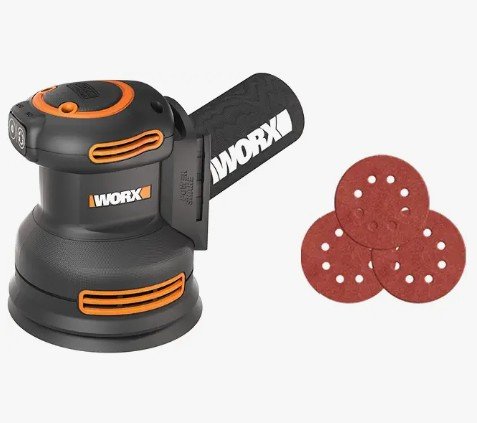
A random orbital sander with various grit options lets you buy budget-friendly lumber and properly finish it to look expensive.
This single tool separates acceptable work from impressive results.
Starting with 80-grit sandpaper removes mill marks and rough spots quickly. Progress to 120-grit for smoothing, then 220-grit for finishing before staining or painting.
This progression takes minutes with a power sander, versus hours by hand.
The difference in final quality is minimal, but the time savings are substantial.
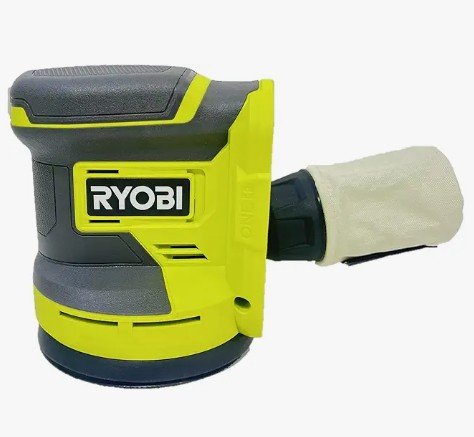
Mouse sanders work excellently for detail work and tight spaces where larger orbital sanders don’t fit. Having both eventually makes sense, but start with a random orbital sander for versatility.
The investment typically ranges from $50 to $90 for quality options.
Brad nailers transformed how I approach trim and finish work. Cordless models eliminate the need for compressors and hoses, which honestly change everything for small projects.
The RYOBI ONE+ HP 18V 18-gauge brushless cordless brad nailer exemplifies this convenience.
No setup time, no hoses tangling around your project, just clean and quick fastening.
The 18-gauge designation matters because it provides versatility for craft projects and renovation work. Thinner gauges risk splitting wood, while thicker gauges leave more visible holes.
The 18-gauge sweet spot handles wall paneling, shiplap installation, trim work, molding, and furniture assembly with minimal visible fastener marks.
Budget options include pneumatic nailers paired with small pancake compressors. These cost significantly less than cordless options and work exceptionally well.
The tradeoff involves setup time and managing air hoses.
For beginners working primarily in one location, pneumatic systems make financial sense. For those moving between rooms or properties, cordless justifies the premium.
Building Your Battery Ecosystem Strategically
This decision genuinely dictates your tool purchases for years, so it warrants careful consideration. Research each brand’s future roadmap.
Which tools do they offer in their cordless lineup, and which align with your projected projects?
RYOBI’s ONE+ platform includes over 280 tools, ranging from drills and saws to lawn equipment and workshop fans. This extensive lineup means you’ll rarely need to switch platforms.
The budget positioning makes systematic tool acquisition affordable on realistic incomes.
Worx Power Share compatibility spans their tool range with similar versatility. DeWalt represents a premium option with professional-grade performance if the budget allows.
Makita offers mid-range quality with strong reliability and durability.
Lock into one platform, then build systematically. Every tool purchase that shares your battery system amplifies the value of previous purchases.
Three tools sharing four batteries means you’re always working with fresh power.
Six tools sharing the same batteries means you’re running a legitimate workshop.
Combo kits provide the best entry point for most beginners. Brands bundle many tools with batteries and chargers at a better value than if a person were to purchase them separately.
A typical combo might include a drill, impact driver, circular saw, work light, two batteries, and a charger for the price of buying just the drill and impact driver separately.
After your initial combo kit purchase, invest in a multi-battery charger. This single upgrade, costing $30–$50, eliminates the clutter of personal chargers and enables tool-only purchases going forward.
Every subsequent tool costs significantly less when you’re not paying for redundant batteries and chargers.
Accessories That Multiply Tool Effectiveness
Tools represent only half the equation. Quality accessories multiply effectiveness and prevent project delays.
Comprehensive bit sets prepare you for any material. A ninety-five-piece kit includes drill bits for wood, metal, and masonry, driver bits for every screw head type, hole saws for larger openings, and countersink bits for flush fastening.
This costs maybe thirty dollars but prevents countless trips to the hardware store.
Circular saw blades matter more than beginners realize. The blade that comes with your saw handles general cutting, but specialized blades dramatically improve results.
Fine-tooth blades produce cleaner cuts in plywood and finished materials.
Ripping blades cut faster along the grain. Spending $20 on two extra blades increases your saw’s versatility.
Miter saw blades similarly specialize. The standard blade handles most applications, but a dedicated trim blade with eighty teeth produces glass-smooth cuts that need minimal sanding.
For projects where appearance matters, the right blade saves enormous finishing time.
Sandpaper variety determines finishing quality. Stock up on many grits from 60 through 220.
Buying variety packs makes sense financially and ensures you always have the right grits available.
Running out of 120-grit halfway through a project and making do with 80-grit shows in the final result.
Safety equipment is non-negotiable. Work gloves protect your hands during material handling.
Safety glasses prevent eye injuries that happen when you least expect them.
Dust masks are essential for sanding and cutting, protecting your lungs from fine particles that can cause long-term damage.
Measuring and marking tools confirm accuracy. A quality tape measure, speed square, and combination square cost minimal money but prevent expensive material waste from incorrect cuts.
A stud finder locates framing behind walls, preventing the frustration of fastening into drywall alone.
Storage solutions extend tool lifespan and prevent loss. Wall-mounted organization systems keep tools visible and accessible.
Tool bags protect cordless tools during transport.
Organized workshops encourage regular use because tools are easy to find and ready to work.
Common Mistakes That Cost Beginners Time and Money
Buying cheap tools initially may seem budget-conscious, but it often ends up costing more in the long run. Ultra-budget options from unknown brands fail quickly, requiring replacement purchases.
Mid-range options from reputable manufacturers last for years and include warranty support.
Mixing battery platforms seems harmless at first, but it quickly becomes expensive. Owning RYOBI, DeWalt, and Worx tools means maintaining three separate battery inventories and charging systems.
This multiplies costs and creates organizational headaches.
Skipping combo kits to buy tools individually wastes hundreds of dollars. The bundled savings on combo kits are genuinely substantial, not marketing gimmicks.
Starting with a comprehensive combo kit and purchasing tool-only additions as needed is the smartest financial approach.
Neglecting safety equipment risks injuries that derail projects and enthusiasm. Safety glasses cost five dollars.
Emergency room visits cost thousands, plus the psychological impact of injury makes future projects stressful instead of enjoyable.
Buying tools before understanding projects leads to garages full of unused equipment. Define your actual projects first, then purchase tools specifically needed for those applications.
Aspirational tool purchases are rarely used regularly.
Ignoring proper maintenance shortens tool lifespan unnecessarily. Keeping batteries charged, cleaning sawdust from vents, and lubricating moving parts takes minimal time but dramatically extends durability.
Tools that last a decade cost far less annually than those that need to be replaced every two years.
People Also Asked
What power tools should a beginner start with?
A cordless drill represents the essential first purchase for any beginner. This single tool handles the majority of basic home improvement projects, including hanging shelves, installing fixtures, assembling furniture, and basic construction work.
After establishing your drill and battery platform, an impact driver becomes the logical second purchase, followed by a circular saw for cutting applications.
Is RYOBI a good brand for beginner DIYers?
RYOBI offers excellent value for beginners through their ONE+ battery platform. The tools deliver reliable performance for home improvement projects at budget-friendly prices.
The extensive product lineup of over 280 cordless tools lets you build a finish workshop within a single battery ecosystem, without switching platforms as your skills develop.
Should I buy corded or cordless power tools?
Cordless tools offer significantly greater convenience for beginners, even though they typically cost more than corded equivalents. The mobility, ease of use, and elimination of extension cords make projects less frustrating and more approachable.
For stationary tools like miter saws that stay in one location, corded options make sense and save money without sacrificing convenience.
What is the difference between a drill and an impact driver?
Drills rotate smoothly and work best for making holes and driving small fasteners. Impact drivers combine rotation with concussive force, making them superior for driving long screws, lag bolts, and heavy-duty fastening applications.
The impact mechanism prevents wrist strain and cam-out, which commonly occur when using regular drills for demanding fastening work.
Do I need a miter saw if I have a circular saw?
Miter saws excel at repetitive crosscuts, angled cuts, and precision work that circular saws struggle to copy efficiently. If your projects involve trim installation, molding, or furniture building requiring many identical cuts at specific angles, a miter saw dramatically improves speed and accuracy.
For basic straight cuts on sheet goods, a circular saw is more versatile.
What size circular saw is best for beginners?
A 6.5-inch or 7.25-inch cordless circular saw handles the large majority of beginner projects effectively. The 7.25-inch size offers slightly more cutting depth and accepts standard blade sizes found at any hardware store.
Cordless models in these sizes provide adequate power while remaining lightweight enough for comfortable extended use.
Are pneumatic or cordless brad nailers better?
Pneumatic brad nailers cost significantly less and work well for projects in a single location where you can set up a compressor. Cordless brad nailers eliminate setup time, air hoses, and noise while providing mobility for finishing between rooms or properties.
For beginners working on scattered projects throughout a house, cordless models justify the higher cost through pure convenience.
How much should I spend on my first power tool set?
A quality combo kit from RYOBI, Worx, or a similar mid-range brand typically costs between $200 and $400 and includes a drill, an impact driver, batteries, and a charger. This investment establishes your battery platform and covers basic drilling and fastening needs. Additional tools purchased individually or as tool-only options expand capabilities as projects demand without requiring further investment.
Key Takeaways
Your first power tool should be a quality cordless drill from a reputable battery platform that offers future expansion options. This single tool handles the majority of beginner projects and establishes your battery ecosystem for years of tool purchases.
Combo kits offer the best value for beginners, bundling many tools, batteries, and chargers at substantial savings compared to buying them individually. Start with a comprehensive kit, then add tools as your skills and projects expand.
Battery platform compatibility matters more than personal tool specifications for long-term budget management. Choose one ecosystem and build systematically within it to minimize costs and maximize battery utility across your entire toolkit.
Cutting tools serve distinct purposes and warrant selection based on specific project requirements rather than forcing one tool into inappropriate applications. Circular saws excel at straight cuts, miter saws provide precision for angles and trim, and jigsaws handle curves and intricate work.
Finishing tools transform amateur results into professional-looking projects and justify their cost through the property value improvements they enable. Sanders and Brad nailers represent small investments with disproportionately large impacts on final project quality.
Quality accessories multiply the effectiveness of tools far beyond their modest cost, with comprehensive bit sets, specialized blades, and proper safety equipment that prevent delays and improve results across all applications.
Leave a Reply