
In a world that often feels hurried, chaotic, and filled with stress, maintaining a positive outlook can seem like a monumental challenge—especially as we navigate the later seasons of life. For many of us over 50, the days may bring physical limitations, health concerns, family responsibilities, or simply the weariness that comes from years of service and sacrifice. Yet, as followers of Jesus Christ, we are invited into something deeper and more transformative: a life marked by patience, grace, contentment, and the deliberate choice to speak life into others. At FruitfulAfter50.com, we believe these years can be among the most fruitful, not despite our age, but because of the wisdom, faith, and resilience God has cultivated in us.
Pursuing What is Good
The Apostle Paul reminds us in 1 Thessalonians 5:14-15 (NIV): “And we urge you, brothers and sisters, warn those who are idle and disruptive, encourage the disheartened, help the weak, be patient with everyone. Make sure that nobody pays back wrong for wrong, but always strive to do what is good for each other and for everyone else.” To pursue what is good—this is our calling. In today’s world, people are often tired and, in many cases, impatient. Grocery clerks rush through lines, drivers weave impatiently through traffic, and conversations online or in person quickly turn sharp. This is precisely the time when followers of Jesus need to be extremely patient and gentle, extending grace to one another.
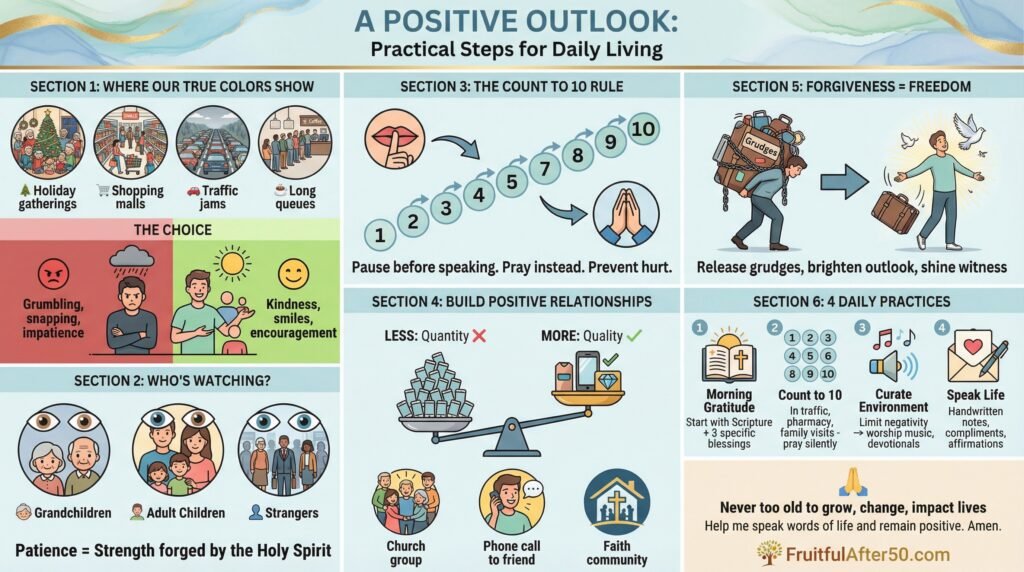
Think about those everyday moments that test our character. Holiday seasons can be joyful and simultaneously exhausting with the family gatherings, crowded airports, and endless meal preparations. Busy shopping malls during sales events, where aisles overflow, and patience wears thin. Congested traffic jams on the way to a doctor’s appointment or church service. Or waiting in long queues to purchase groceries, medications, or even a simple cup of coffee. These are the places where our “true colors” show. Do we grumble under our breath? Snap at a slow-moving cashier? Or do we choose kindness, offering a smile or a word of encouragement to the weary worker or fellow shopper who might be carrying burdens we cannot see?
As believers, we have a unique platform. Our grandchildren watch how we respond to delays. Our adult children notice if we remain calm amid frustration. Even strangers in the checkout line may receive a glimpse of Christ through our patience. This is not weakness—it is strength forged by the Holy Spirit. When we choose grace over grumbling, we reflect the heart of our Savior, who endured far greater trials with perfect patience.
Embracing Contentment
Closely tied to patience is the beautiful virtue of contentment. The Bible declares in 1 Timothy 6:6 (NIV), “But godliness with contentment is great gain.” In our later years, it is tempting to focus on what we have lost: youthful energy, career achievements, financial security, or loved ones who have gone home to glory. Yet God calls us to contentment—not resignation, but a deep satisfaction in His provision. Whether we live in a cozy retirement home, a bustling family household, or a quiet apartment, our greatest gain comes from godliness paired with a grateful heart.
Contentment frees us from the endless chase for more. It allows us to savor simple joys: a sunrise viewed from the porch, a phone call from a distant grandchild, the warmth of a shared meal with friends from church. When we cultivate this mindset, impatience fades. We no longer resent the slower pace of life; instead, we embrace it as an invitation to deeper prayer, reflection, and relationship with God and others.
The Power of Our Words
One practical habit that guards both patience and contentment is learning to pause before we speak. Count to 10 before you say something that might be hurtful or counterproductive. More often than not, by refraining from saying that nasty thing, we prevent an ugly or hurtful situation. How many family disagreements, church conflicts, or strained friendships could be avoided with this simple discipline? In our senior years, words carry even greater weight. A sharp remark to a spouse of 30+ years can wound deeply. A critical comment about a grandchild’s choices can close doors that prayer and patience might have opened.
Jesus Himself emphasized the importance of our speech. In Matthew 15:11 (NIV), He taught, “What goes into someone’s mouth does not defile them, but what comes out of their mouth, that is what defiles them.” Careless and negative words can hurt people and leave them feeling downhearted. Encouraging words, on the other hand, can give people hope and confidence to face life’s challenges. A kind or thoughtful word can literally change someone’s life.
The Bible is clear: “The tongue has the power of life and death, and those who love it will eat its fruit” (Proverbs 18:21 NIV). Both negative and positive words are infectious. Negative words spread discouragement like a virus, draining joy from a room or a relationship. Positive words, rooted in Scripture and prayer, lift spirits and build resilience. That is why it is so important to spend time with optimistic people who share a positive outlook on life—fellow believers in your Bible study group, prayer partners, or longtime friends who choose gratitude over complaint.
Cultivating Christ-like Qualities
As we age, our social circles may shrink, but the quality of our relationships matters more than quantity. Seek out those who speak life. Join a senior ministry at church, participate in online faith communities designed for mature believers, or simply call an old friend to share testimonies of God’s faithfulness. When we surround ourselves with positivity, we become more aware of the good things in life and the best in people. Then we will be more intentional about how we can contribute rather than tear down.
Paul expands on this Christ-like character in Colossians 3:12-13: “Therefore, as the elect of God, put on tender mercies, kindness, humility, meekness, bearing with one another, and forgiving one another. If anyone has a complaint against another, even as Christ forgave you, so you must also do.” These are not optional accessories; they are the wardrobe of the believer. As God’s chosen and dearly loved children, we “put on” compassion like a favorite sweater, kindness like well-worn shoes, humility like a gentle scarf. We bear with one another—especially when arthritis flares, memory fades, or differing opinions arise in family discussions. We forgive as Christ forgave us, releasing old hurts from decades past so they no longer poison our present joy.
For many of us, forgiveness is the key to lasting positivity. Perhaps a sibling never repaid a loan, a child made choices that broke your heart, or a church member spoke unkindly years ago. Carrying these grievances weighs us down like heavy luggage on a journey we were meant to travel lightly. But when we forgive—truly release the debt—we experience the freedom Jesus promised. Our outlook brightens, our prayers flow more freely, and our witness shines brighter.
Practical Steps for Daily Living
Living this way requires intentionality, especially in a culture that celebrates quick wit and sharp retorts. Here are a few practical steps tailored for our season of life:
- Start each day with Scripture and prayer focused on gratitude. Thank God for three specific blessings before your feet hit the floor.
- Practice the “count to 10” rule in traffic, at the pharmacy, or during family visits. Use those seconds to pray silently for the person testing your patience.
- Curate your environment. Limit exposure to negative news or critical conversations. Instead, listen to worship music, read encouraging devotionals, or watch faith-based testimonies.
- Look for opportunities to speak life. Send a handwritten note to a lonely neighbor. Compliment the young cashier. Tell your spouse or child why you are proud of them.
- Reflect weekly: At the end of each Sunday, journal one way you pursued goodness and one area where you need more grace. Share it with an accountability partner.
These habits do not come naturally, but they grow stronger with practice—and with the help of the Holy Spirit. As we pursue them, we discover that a positive outlook is not about denying difficulties; it is about seeing them through the lens of God’s sovereignty and goodness.
The Fruits of Positivity in Later Years
In our later years, a positive outlook bears rich fruit. Medical studies affirm what Scripture has always taught: gratitude and optimism reduce stress, improve heart health, strengthen immunity, and even extend life. More importantly, they honor God and draw others to Him. Grandchildren remember the grandmother who always had a kind word and a listening ear. Adult children seek counsel from the father whose faith remained steady through trials. Church communities thrive when seasoned saints model patience and forgiveness.
Friends, let us commit afresh to this calling. We are not too old to change, to grow, or to impact lives. On the contrary, our years of walking with Jesus equip us to lead with quiet strength and radiant joy.
Prayer:
Father God, I often find myself becoming negative and impatient, and saying things I should keep quiet about. Please help me behave like a Christian should, speaking only words of life and working as if I am working for You. Help me to remain positive, both for myself and those I am in contact with. Amen.
May this prayer become our daily anchor. As we walk it out, we will discover that the most fruitful season of all is the one lived with a heart fixed on Christ—patient, content, kind, and full of life-giving words. At FruitfulAfter50.com, we celebrate this journey together. Share your stories in the comments below: How has God helped you maintain a positive outlook in your later years? Let us encourage one another as we strive to do what is good.
Leave a Reply