
Introduction
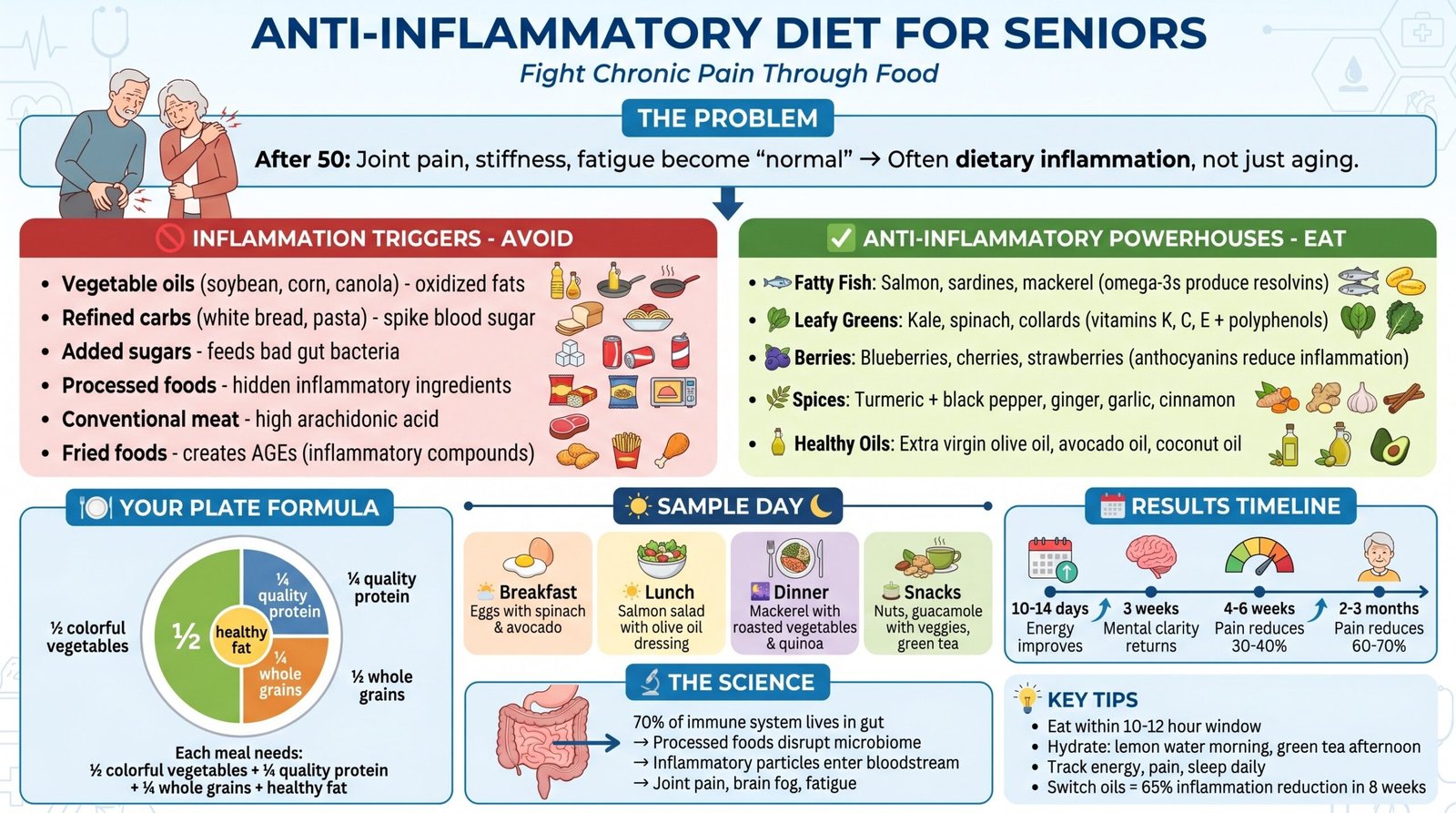
Chronic pain has a sneaky way of becoming “normal” after 50. One day it’s stiff knees; the next, ibuprofen on the nightstand, like it’s part of the décor. 😅
This guide shows you how food can help fight inflammation from the inside out — and why what you eat matters more than you may have been told.
After 50, many factors affect your body’s inflammation levels. Gut health, stress hormones, sleep, and what’s on your plate three times a day all play a role.
The good news? The anti-inflammatory diet for seniors introduces a few strategic changes to your eating plan to significantly reduce chronic pain and get you back to activities you may have quietly put on pause.
I am not a doctor, and strongly recommend that you consult with your doctor prior to making any decisions regarding health care and dietary changes.
Affiliate Disclaimer: This post may contain affiliate links, meaning we earn a commission if you purchase through them – at no extra cost to you. We only recommend products or services we believe add value to our readers.
Why Traditional Pain Management Fails Most Seniors
You’ve probably seen it everywhere — treating symptoms while the real problem keeps smouldering beneath the surface. Joint pain gets medicated, but the foods driving inflammation stay firmly on the menu.
It’s a bit like trying to put out a house fire with a garden hose… while someone pours gasoline on the other side. 🔥
Medication absolutely has its place. But when chronic, low-grade inflammation shows up as achy knees, stiff fingers, lower back pain, or that constant feeling of being “older than you should be,” food often becomes your most powerful tool.
What many people chalk up to “just getting older” is often dietary inflammation building quietly over decades. It creeps in so slowly that you barely notice — until the pain demands your attention.
The Science Behind Food and Inflammation
Your body produces inflammatory compounds, such as prostaglandins and cytokines, in response to certain triggers. Some foods increase their production. Others actively calm them down.
Arachidonic acid — found in high amounts in conventionally raised meat and dairy — converts directly into inflammatory prostaglandins. Omega-3 fatty acids from fish do the opposite.
They produce anti-inflammatory compounds called resolvins, which help your body turn off inflammation rather than letting it simmer.
The ratio matters more than most people realize. The standard American diet has an omega-6-to-omega-3 ratio of about 20:1.
Your body functions best at a ratio closer to 4:1 or lower.
That imbalance alone can create a constant inflammatory state that medication struggles to fully correct.
Advanced glycation end products (AGEs) are another major culprit. They form when proteins or fats mix with sugar in your bloodstream. Over time, they accumulate in tissues and trigger inflammation.
High-sugar diets and high-heat cooking dramatically increase AGE formation — not exactly a winning combination.
Your gut microbiome also deserves serious attention. About 70% of your immune system lives in your gut. When that ecosystem gets disrupted by processed foods, antibiotics, or chronic stress, intestinal permeability can develop.
That allows inflammatory particles into your bloodstream — leading to joint pain, brain fog, fatigue, and that vague sense that something just isn’t right.
Understanding the Real Culprits
When you start paying attention to inflammation triggers, some surprises tend to show up.
Vegetable oils are often the biggest offenders.
Soybean oil, corn oil, canola oil, and other refined seed oils are extracted at high temperatures, creating oxidized fats your body treats like foreign invaders.
They hide everywhere — processed foods, restaurant meals, and even “healthy” snacks like granola and protein bars. Sneaky stuff. 🕵️♂️
Switching to extra virgin olive oil, avocado oil, and coconut oil often leads to noticeable improvements in stiffness and mobility within weeks.
Refined carbohydrates are another major driver.
White bread, pasta, cereals, and baked goods spike blood sugar fast.
That spike triggers insulin. The crash that follows releases stress hormones like cortisol, which quietly fuel inflammation.
Replacing refined grains with intact whole grains like steel-cut oats, quinoa, and wild rice helps feed beneficial gut bacteria that produce short-chain fatty acids — powerful anti-inflammatory compounds.
Added sugar deserves its own warning label.
Reading ingredient lists can be eye-opening (and mildly infuriating 😬). Yogurt, energy bars, and sauces — sugar shows up where you least expect it.
Sugar feeds harmful gut bacteria, spikes insulin, increases oxidative stress, and accelerates every inflammatory pathway in the body.
The Foods That Actually Fight Inflammation
Once inflammatory foods are reduced, adding the right foods makes a powerful difference.
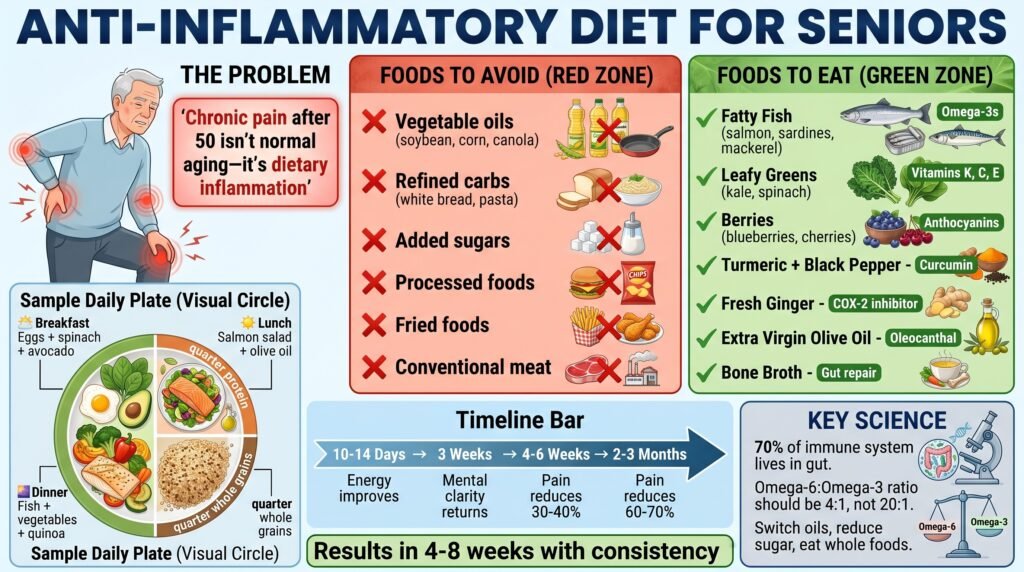
Wild-caught fatty fish like salmon, mackerel, sardines, and anchovies provide EPA and DHA omega-3s your body can use immediately. These fats compete directly with inflammatory pathways — blocking them while building anti-inflammatory ones.
Sardines deserve special credit. They’re affordable, sustainable, and packed with omega-3s. Toss them on salads, mash them on toast, or mix them into pasta with garlic and greens.
Turmeric earns its reputation — with one caveat. Curcumin is poorly absorbed on its own. Pairing it with black pepper dramatically boosts absorption, especially when combined with fat.
Golden milk made with turmeric, ginger, coconut milk, black pepper, and a touch of honey isn’t just comforting — it’s joint-friendly too ☕.
Ginger works differently, inhibiting COX-2 enzymes like NSAIDs do, but without the digestive side effects. Fresh ginger packs the biggest punch.
Leafy greens provide vitamins K, C, and E, along with polyphenols that neutralize inflammatory free radicals. Dark greens like kale and collards also supply magnesium and calcium, which help regulate inflammation at the cellular level.
Not a salad fan? No problem. Spinach disappears into eggs, kale hides beautifully in smoothies, and quick sautés with garlic and olive oil make great sides.
Berries contain anthocyanins that help reduce neuroinflammation and stabilize blood sugar. Frozen berries are just as nutritious and easier on the budget.
Extra virgin olive oil contains oleocanthal — a compound that works similarly to ibuprofen. Drizzle it generously, but avoid overheating it past its smoke point.
Bone broth supports gut lining repair with collagen, gelatin, and amino acids like glycine. When it gels after cooling, you know you’ve extracted the good stuff.
Building Your Daily Framework
The Anti-inflammatory diet for Seniors works best when it becomes automatic.
Each meal works best when it includes:
- Quality protein
- Healthy fats
- Colorful vegetables
Breakfast might be eggs with spinach and avocado, Greek yogurt with berries and nuts, or oats cooked in bone broth with mushrooms.
Lunch often comes together fastest with leftovers or a big salad prepped ahead of time.
Dinner follows a simple plate method: half vegetables, one-quarter protein, one-quarter whole grains or starchy vegetables.
Snacks shift from packaged foods to whole options — nuts, guacamole with vegetables, or fruit with nut butter.
Hydration matters more than most people think. Even mild dehydration concentrates inflammatory compounds. Lemon water in the morning and green tea in the afternoon make easy upgrades 🍋🍵.
🌿 Anti-Inflammatory Diet Guide
Personalized Food Solutions for Chronic Pain & Inflammation in Seniors
Preparation: Batch cook on Sundays. Prep salad components, make bone broth, cook grains in advance.
Hydration: Drink half your body weight in ounces of water daily. Add lemon in the morning for liver support.
Tracking: Keep a simple daily log rating energy, pain, sleep & mood on a 1-10 scale to identify patterns.
The standard American diet has an omega-6 to omega-3 ratio of 20:1. Your body functions best at 4:1 or lower. This imbalance alone creates baseline inflammation.
Advanced Glycation End Products (AGEs) form when proteins mix with sugar in your bloodstream, accumulating in tissues and triggering inflammation. High-sugar diets and high-heat cooking dramatically increase AGE formation.
About 70% of your immune system lives in your gut. When your microbiome falls out of balance from processed foods, it creates intestinal permeability, allowing inflammatory particles into your bloodstream. This triggers systemic inflammation manifesting as joint pain, brain fog, and fatigue.
Timing and Meal Frequency
When you eat matters almost as much as what you eat.
A consistent 10–12 hour eating window gives your digestive system time to repair. Stopping food by early evening often improves sleep, and better sleep lowers inflammation the next day.
Spacing meals 4–5 hours apart helps keep insulin levels stable and reduces inflammatory signaling.
Adapting for Specific Health Conditions
Certain tweaks can help depending on your situation.
- Arthritis or gout: Cherries and tart cherry juice may reduce flare-ups
- Digestive inflammation: Cooked vegetables are often easier to tolerate
- Autoimmune conditions: Temporary removal of nightshades may help
- Blood sugar issues: Eating protein and fat before carbs blunts glucose spikes
Small changes can make big differences when inflammation is involved.
Measuring Your Progress
Inflammation reduction shows up in more ways than pain alone.
Energy often improves first. Sleep follows. Brain fog lifts. Joint stiffness fades gradually but steadily.
Tracking energy, pain, sleep, and mood on a simple scale helps patterns emerge quickly — and keeps motivation high.
Blood markers like C-reactive protein and A1C often confirm what you’re already feeling.
Advanced Strategies
Once the basics are solid, additional tools can help:
- Occasional intermittent fasting
- Anti-inflammatory spice blends
- Fermented foods for gut diversity
- Medicinal mushrooms like shiitake and maitake
These aren’t required — but they can accelerate progress when inflammation is stubborn.
Frequently Asked Questions
How long does an anti-inflammatory diet for Seniors take to work?
Most people notice early improvements in energy within two weeks. Joint pain reduction usually takes 4–6 weeks, with continued improvement over time.
What are the best anti-inflammatory foods for joint pain?
Fatty fish, turmeric, ginger, leafy greens, berries, olive oil, and bone broth are among the most effective.
Should seniors avoid nightshade vegetables?
Not always. Some people with autoimmune conditions benefit from temporary removal, while others tolerate them well.
Can ginger and turmeric really help with inflammation?
Yes — when used consistently and correctly, both reduce inflammatory pathways supported by research.
Key Takeaways
The Anti-inflammatory diet for seniors eating plan can reduce chronic pain within 4–8 weeks when done consistently.
Removing inflammatory oils, refined carbs, and added sugar while emphasizing fatty fish, vegetables, healthy fats, and spices creates lasting change.
Progress matters more than perfection. Sustainable habits beat short-term overhauls every time.
You don’t need hype — just clarity, consistency, and a little patience.
And yes… you’ve absolutely got this 💪😊
Supplement your health progress with Citrus Burn.
You can Ignite Your Fat-Burning Fire with Citrus Burn’s Citrus Twist!
Leave a Reply to 5 Financial Wellness Steps Every Person Over 50 should take Now - Silver Shield Wealth Cancel reply