
Gold IRA Company pass the Ethics Test?
A Comprehensive Guide to USA Compliance and Best Practices
Introduction
Gold IRA Company ethics test:
In an era of economic uncertainty, inflation concerns, and market volatility, many Americans are turning to Gold IRAs to diversify their retirement portfolios with physical precious metals. A Gold IRA allows investors to hold IRS-approved gold, silver, platinum, and palladium within a tax-advantaged retirement account. However, this sector has attracted both reputable firms and opportunistic players, making ethical conduct and strict regulatory compliance essential.
The question every investor must ask is: Does my Gold IRA company pass the ethics test? This report examines key U.S. compliance rules, red flags, evaluation criteria, and best practices for the Gold IRA Company ethics test. It equips you to make informed decisions and protect your hard-earned retirement savings.
Affiliate Disclaimer: This post may contain affiliate links, meaning we earn a commission if you purchase through them – at no extra cost to you. We only recommend products or services we believe add value to our readers.
What Is a Gold IRA and Why Compliance Matters
A Gold IRA is a self-directed Individual Retirement Account that holds physical precious metals instead of (or alongside) stocks, bonds, or mutual funds. It offers potential inflation hedging and portfolio diversification, with the same tax advantages as traditional or Roth IRAs.
However, the IRS imposes strict rules under Internal Revenue Code (IRC) Section 408(m) to prevent abuse. Non-compliance can result in the IRS treating the metals as a taxable distribution – potentially triggering income taxes plus a 10% early withdrawal penalty if you’re under 59½. In severe cases, it can disqualify the entire IRA.
Ethical companies prioritize full compliance, transparency, and client education over aggressive sales tactics.
Core IRS Compliance Rules for Gold IRAs
1. IRS-Approved Custodian Requirement
Every Gold IRA must be administered by an IRS-approved custodian (typically a bank, trust company, or non-bank trustee meeting strict financial and fiduciary standards). The custodian handles paperwork and tax reporting (e.g., Form 5498) and ensures regulatory compliance. Reputable dealers partner with established custodians like Equity Trust, STRATA, or similar specialized firms.
2. Approved Precious Metals Only
Not all gold qualifies. Key standards include:
- Gold: Minimum 99.5% purity (0.995 fineness). American Gold Eagles are allowed at 91.67%.
- Silver: 99.9% purity.
- Platinum & Palladium: 99.95% purity.
Products must come from approved mints/refiners. Collectibles, rare/numismatic coins, and many foreign coins are generally prohibited as they fall under the “collectibles” ban. Ethical companies clearly list only IRA-eligible items and guide clients accordingly.
3. Secure Storage in IRS-Approved Depositories
Physical metals cannot be stored at home or in a personal safe deposit box. They must remain in the physical possession of an IRS-approved depository (e.g., Brink’s, Delaware Depository, or a similar depository). These facilities offer high-security vaults, insurance, regular audits, and segregated (your specific bars/coins) or commingled storage options. Taking personal possession is a prohibited transaction.
4. Contribution and Withdrawal Rules
Gold IRAs follow standard IRA limits (e.g., $7,000 under 50; $8,000 age 50+ in recent years, subject to annual adjustments). Rollovers from 401(k)s or existing IRAs are common. Withdrawals are taxed as ordinary income (Roth exceptions apply), and the required minimum distribution (RMD) rules generally apply.
5. Prohibited Transactions
Self-dealing (e.g., buying from related parties) or using IRA assets for personal benefit is banned.
The Gold IRA Company Ethics Test: Key Criteria for Evaluation
Transparency in Fees
Ethical companies provide clear, written fee disclosures upfront. Common fees include:
- Setup fees ($50–$200)
- Annual custodian/storage fees ($100–$500+)
- Spread/markup on metals (typically 5–15% for IRA products; lower is better)
- No hidden “account maintenance” surprises.
Beware of “zero fees forever” promises that often hide markups elsewhere.
No High-Pressure Sales Tactics
Legitimate firms educate rather than pressure. Red flags include urgency (“Act before the dollar collapses!”), guaranteed returns (impossible for commodities), or pushing non-eligible collectibles.
Reputation and Complaint History
Check:
- Better Business Bureau (BBB) rating and resolved complaints.
- Business Consumer Alliance (BCA)
- Trustpilot, Google, and Consumer Affairs reviews
- State regulators and FINRA/CFTC/SEC actions
Zero or minimal unresolved complaints over many years is a strong positive indicator.
Education-First Approach
Top companies offer free webinars, one-on-one consultations, market reports, and clear explanations of risks. They avoid overpromising performance.
Strong Custodian and Depository Partnerships
Verify the partners are IRS-approved and insured. Ask about segregated storage and insurance details.
Buyback and Liquidity Policies
Ethical firms offer fair, competitive buyback programs without excessive penalties.
Regulatory Compliance Record
No history of lawsuits, fraud allegations, or regulatory sanctions.
Common Red Flags in the Gold IRA Industry
- Unsolicited calls or aggressive marketing.
- Inflated markups (e.g., 40–200% on coins while claiming low spreads).
- Poor or fake reviews.
- Pressure to roll over entire retirement accounts quickly.
- Lack of transparent pricing or refusal to provide written fee schedules.
- Promises of “free” gold/silver that come with strings.
- Companies with numerous unresolved complaints or legal issues.
Several high-profile cases have involved dealers misleading investors on markups, leading to SEC/CFTC actions and substantial investor losses.
Why a Checklist Matters
Using a structured checklist helps you conduct a gold IRA Company ethics test objectively:
- IRS custodian and depository partnerships.
- Purity and eligibility expertise.
- Fee transparency.
- Complaint-free history.
- Educational resources and post-sale support.
- Longevity and financial stability.
- Clear buyback policy.
Augusta Precious Metals: A Case Study in Ethical Practices
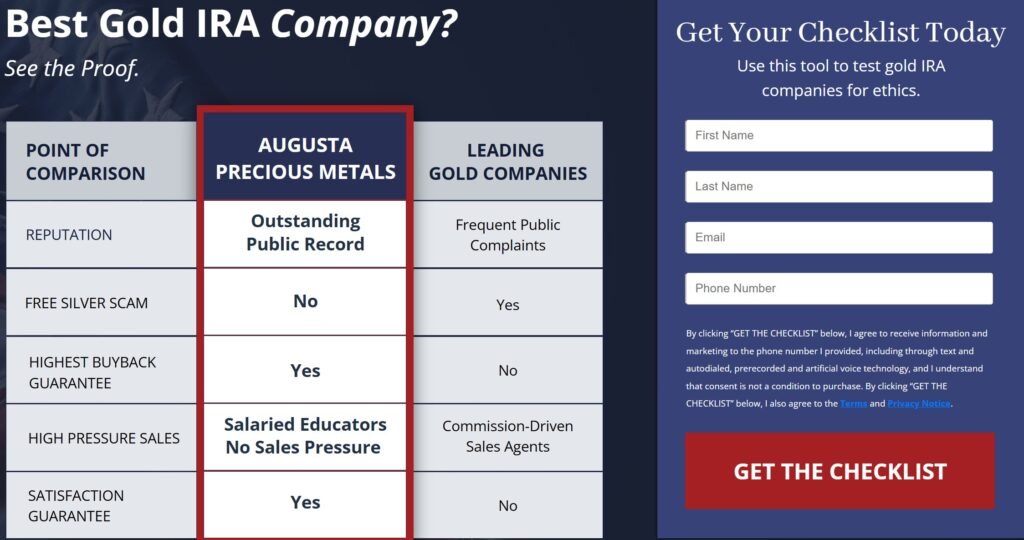
Many investors seeking trustworthy options explore companies with proven track records. Augusta Precious Metals stands out for its long-term focus on transparency, education, and compliance. The company has maintained an A+ BBB rating with zero unresolved complaints, an AAA BCA rating, and a strong emphasis on client education through one-on-one sessions.
Augusta partners with established custodians and approved depositories, maintains clear pricing, and prioritizes IRA-eligible products. Their approach emphasizes informed decision-making over high-pressure sales.

Additional Best Practices for Investors
- Work directly with the custodian to set up the account.
- Diversify appropriately – precious metals should typically be a portion (5–20%) of your portfolio.
- Understand tax implications of rollovers and distributions.
- Review annual statements and depository reports.
- Consult a tax advisor or financial planner familiar with self-directed IRAs.
Conclusion
A Gold IRA can be a valuable diversification tool, but only when paired with an ethical, compliant provider. The Gold IRA Company ethics test helps you to focus on IRS rules, transparency, reputation, and client-first practices, enabling you to significantly reduce risks. Always verify claims independently, use checklists, and prioritize companies with clean records and educational focus.
Your retirement savings deserve the highest standards of care. Take time to thoroughly evaluate providers – your future financial security depends on it.
Conduct a ‘Gold IRA Company ethics test’ for peace of mind.
Disclaimer: This report is for educational purposes only and is not financial, tax, or investment advice. Precious metals involve risk, including price volatility. Consult qualified professionals before making decisions. Always verify current IRS rules and company status.
Leave a Reply