

This post, “What is the best way to invest in precious metals?” describes common methods for purchasing and holding precious metals, including gold, silver, platinum, and palladium. It outlines factual details about physical ownership, exchange-traded funds, mining company shares, streaming arrangements, and self-directed retirement accounts holding metals. Information is presented for educational purposes regarding transaction processes and structures.
Affiliate Disclaimer: This post may contain affiliate links, meaning we earn a commission if you purchase through them – at no extra cost to you. We only recommend products or services we believe add value to our readers.
Overview of Precious Metals Categories
Precious metals transactions commonly involve gold, silver, platinum, and palladium. Gold is frequently discussed in relation to its historical role in monetary systems. Silver has both monetary and industrial applications. Platinum and palladium are used in industrial processes, including automotive components, with additional investment-related demand in some cases.
Products are available in physical form, such as coins or bars, produced by government mints or private refiners. Coins include American Gold Eagles, Canadian Maple Leafs, Austrian Philharmonics, and South African Krugerrands. Bars come in various sizes, ranging from 1-ounce to larger formats like 400-ounce gold bars or 1000-ounce silver bars.
Numismatic or collectible coins are also available through dealers; these items incorporate factors such as rarity and historical characteristics in addition to metal content.

Silver occupies an interesting dual role as both a monetary metal and an industrial commodity, creating unique price dynamics.
Platinum and palladium are primarily industrial metals used heavily in automotive catalytic converters, though platinum also has investment demand.
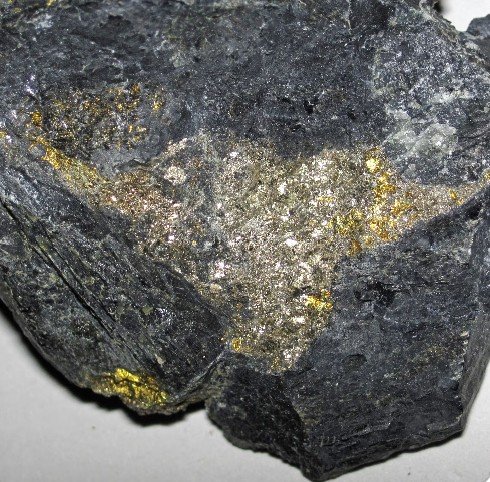
Physical Bullion Transactions
One method for obtaining precious metals is to purchase physical coins or bars for direct ownership. Buyers select products from dealers and arrange for delivery or storage.
When purchasing physical bullion, the price paid consists of the prevailing spot price plus a premium. Premiums cover minting, distribution, and dealer costs. Premium levels vary by product type, with bullion coins and bars from recognized mints typically showing different percentages compared to other items.
After purchase, ownership can involve taking physical possession or arranging storage. For possession, buyers handle security and insurance arrangements independently. Professional storage options exist through depositories that offer allocated or segregated storage, where specific coins or bars are identified and tracked separately by serial numbers or markings. Commingled or unallocated options involve metals held in shared pools with ownership recorded through account records.
Depositories such as Delaware Depository and other IRS-approved facilities provide vault services. Storage fees are charged annually and vary depending on the selected arrangement. Segregated storage generally involves higher fees due to the need for individual identification and handling procedures.
Liquidity in physical transactions occurs through sales back to dealers. Buyback prices are determined by current market conditions and applicable spreads at the time of the sale. Dealers apply premiums on purchases and spreads on sales, creating round-trip transaction costs that can be reviewed when obtaining quotes.
The transaction process typically includes an initial consultation with a dealer representative to discuss available products and current pricing. Written quotes for specific coins or bars are requested to review total costs, including any shipping or payment method fees. Payment is completed, followed by shipping arrangements with insurance coverage and tracking information.
For stored holdings, periodic statements from the depository or custodian describe the metals held and provide approximate values based on market prices at the statement date. Customers can request detailed inventory records, including serial numbers for segregated items.
Exchange-Traded Funds (ETFs) Holding Precious Metals
Exchange-traded funds offer another way to gain exposure to precious metals prices. These funds hold physical metals in vaults and issue shares that trade on stock exchanges through brokerage accounts.
Examples include SPDR Gold Shares (GLD) for gold and iShares Silver Trust (SLV) for silver. Other funds cover platinum, palladium, or combinations of metals. Expense ratios for these funds are published by the fund providers.
Shares can be bought or sold during market hours through standard brokerage platforms. The funds manage storage, insurance, and logistics for the underlying physical metals held in vaults. Audited reports and insurance details are available from the fund providers.
Position sizes can be adjusted in smaller increments compared to minimum physical bar or coin purchases. Shares represent ownership in a trust that holds the metals rather than direct possession of specific items.
Tax reporting for these holdings follows IRS classifications for collectibles in taxable accounts. Long-term capital gains on positions held more than one year are subject to a maximum rate of 28%. Short-term gains are taxed as ordinary income. Record-keeping for cost basis includes the purchase price of shares.
Please note that we are neither tax advisors, or financial advisors, and recommend that you consult with your personal tax and financial advisors for details.
Here’s a look at historical gold and silver prices to illustrate long-term trends: Warning: Past performance is not a guarantee of future investment growth.
Here’s a look at historical gold and silver prices to illustrate long-term trends: Warning: Past performance is not a guarantee of future investment growth.
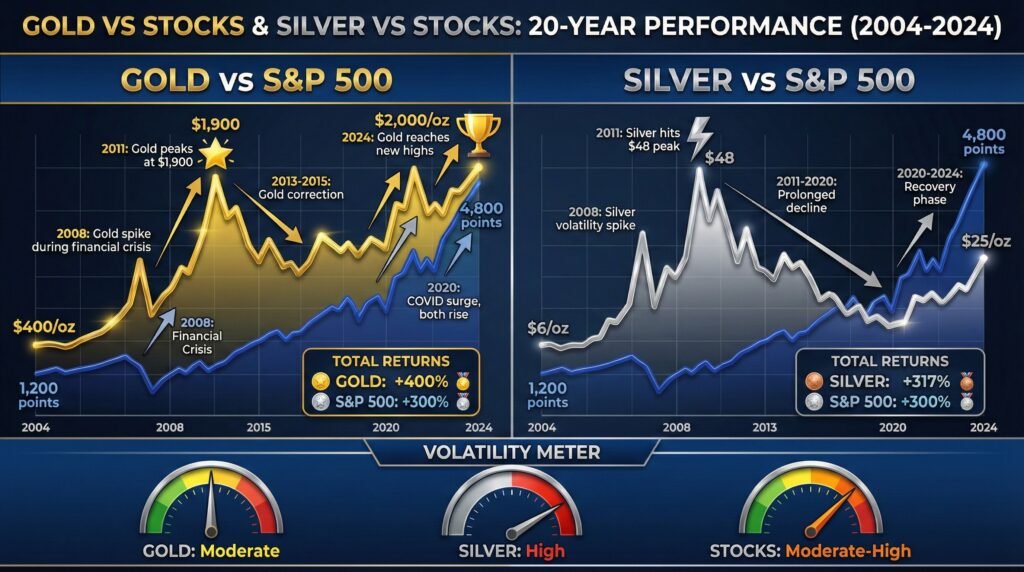
The key insight here is that precious metals serve as wealth preservation and portfolio diversification tools. You’re not going to see the dramatic growth potential you might get from tech stocks, but you’re also not likely to see your precious metals investment go to zero the way a company stock can.
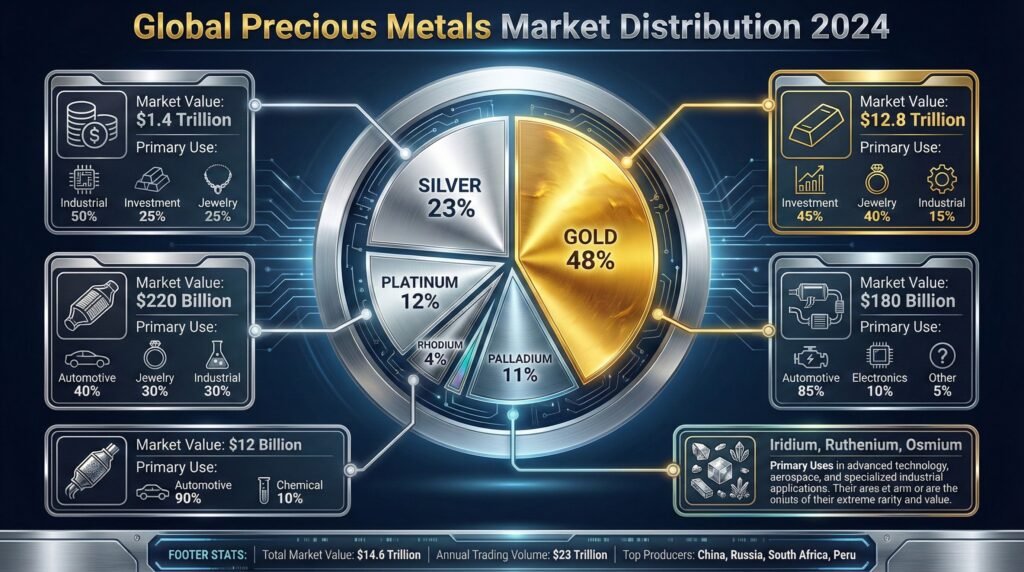
And this chart shows the market share breakdown among precious metals:
Mining Company Shares
Shares in companies engaged in mining precious metals provide an indirect connection to metal production. These companies extract and process gold, silver, platinum, or palladium from mining operations.
Major companies include Newmont, Barrick Gold, and Agnico Eagle. Smaller or junior mining companies focus on exploration or development of specific projects.
Exchange-traded funds focused on mining companies, such as VanEck Gold Miners ETF (GDX) and VanEck Junior Gold Miners ETF (GDXJ), hold portfolios of multiple mining companies.
Mining company shares are taxed as regular equities. Long-term capital gains rates applicable to equities apply rather than collectibles rates. Some mining companies distribute dividends as part of their corporate operations.
Operational aspects of mining companies include production costs, mine development, and regulatory requirements for permitting. These elements influence company financial reporting but are not subject to predictions here.
Please note that we are neither tax nor financial advisors, and recommend that you consult with your personal tax and financial advisors for details.
Streaming and Royalty Companies
Streaming and royalty companies provide financing to mining operations in exchange for rights to purchase portions of future production at predetermined prices or to receive payments based on production volumes.
Examples of such companies include Franco-Nevada, Wheaton Precious Metals, and Royal Gold. These entities enter into contracts with multiple mining operations, creating portfolios of agreements across different mines and metals.
This structure allows participation in metal production revenue without direct involvement in mine operations, such as labor, equipment, or capital expenditures for development. Revenue streams are derived from contracted terms rather than from owning physical metals or operating mines.
Shares in these companies trade on stock exchanges and are subject to equity taxation rules, including applicable long-term capital gains rates.
Please note that we are not tax advisors and recommend that you consult with your tax advisor for details.
Self-Directed Retirement Accounts Holding Precious Metals
Self-directed Individual Retirement Accounts (IRAs) can hold certain physical precious metals that meet the IRS’s purity and form requirements. Approved products generally include bullion coins and bars from recognized mints that satisfy minimum fineness requirements. Some numismatic and collectible coins do not qualify under IRS rules for retirement accounts.
Account setup involves a specialized custodian that administers the self-directed IRA and ensures compliance with IRS regulations. Augusta Precious Metals works with custodians such as Equity Trust Company, GoldStar Trust Company, and Kingdom Trust for these services. Storage must occur at an IRS-approved depository.
The process begins with coordination between the custodian and any existing retirement account for transfers or rollovers. Paperwork and identity verification are required. Once funds are in the self-directed IRA, metal selection occurs with the dealer. The metals are then shipped to the approved depository for allocation to the account.
Fees for these accounts include a setup or account opening component. Consult with Augusta Precious Metals regarding the fee structure based on your personal requirements. Exact fees depend on the selected custodian, storage option, and the customer’s current account details; customers should request written confirmation of all fees directly from Augusta Precious Metals and the chosen custodian.
Depositories such as the Delaware Depository and other IRS-approved facilities (with locations in various U.S. cities, including Wilmington, DE, and Dallas, TX) are used in connection with these accounts. Segregated storage identifies specific items by serial numbers or markings; commingled storage tracks ownership proportionally in a shared pool of the same type and purity of metal.
Statements from the custodian and depository provide holdings information. Metals in the IRA remain in depository custody and cannot be withdrawn for personal possession without following IRS distribution procedures, which treat the action as a distribution.
Augusta Precious Metals offers services related to self-directed precious metals IRAs. Their processes involve coordination with custodians and depositories for account setup and metal allocation. The company, founded in 2012 and based in Beverly Hills, California, with operations in Casper, Wyoming, assigns dedicated representatives as part of their described service structure and provides educational materials on transaction mechanics. Augusta Precious Metals maintains an A+ rating with the Better Business Bureau.
Transaction and Storage Processes in Detail
Across methods, purchasing precious metals involves requesting quotes from dealers for specific products. Quotes include spot price plus premiums. Written confirmation of pricing, including shipping and any fees, is obtained before proceeding.
For physical or IRA-held metals, shipping to a depository or buyer is insured. Allocation confirmations include descriptions or serial numbers for segregated holdings.
Storage arrangements require review of depository procedures, insurance coverage details (which can be requested in writing), and any differences between segregated and commingled options. Annual fees apply based on the selected structure. Augusta Precious Metals facilitates shipping to chosen depositories with insured delivery.
Sales of metals involve contacting the dealer or, for IRA accounts, working through the custodian. Buyback pricing reflects market conditions and dealer spreads at the time.
Record-keeping for all transactions includes documentation of purchase prices, premiums paid, and any associated fees to support required tax reporting on Form 8949 and Schedule D, where applicable. Dealers may file Form 1099-B for certain sales volumes, such as 25 or more ounces of specific gold or silver products.
General Mechanics of Precious Metals Acquisitions
Dealers like Augusta Precious Metals facilitate purchases of IRA-eligible coins and bars, as well as direct-ownership items. Assigned representatives provide information on available products during consultations. Product selection considers factors such as mint origin, purity standards, and form (coin versus bar).
For IRA accounts, only IRS-eligible metals are permitted. Custodians verify compliance before allocation at the depository. Timeframes for transfers, fund receipt, metal ordering, and depository allocation typically span weeks, depending on documentation and volume.
Educational materials from companies describe the mechanics of purchasing, storage options, and general transaction steps. Augusta Precious Metals is noted for providing such materials and guidance as part of their onboarding and ongoing service processes. The company has a stated minimum investment of $50,000 for its services.
People Also Asked
How much gold should I own?
There is no standard amount. Quantities purchased vary by individual transaction and depend on factors such as product availability and dealer minimums. Augusta Precious Metals has a stated minimum investment of $50,000 for its services.
Is it better to buy physical gold or gold ETFs?
Physical gold involves direct ownership of coins or bars with associated storage and transaction processes. Gold ETFs involve shares in funds that hold physical metal in vaults and trade through brokerage accounts. Each structure operates with different mechanics for acquisition, holding, and liquidity.
Are gold mining stocks described as a certain type of investment?
Mining company shares provide access to companies engaged in the extraction and production of precious metals. These shares operate under equity market structures and company-specific operational factors.
What is the best precious metal to invest in right now?
No single metal is identified as best. Gold, silver, platinum, and palladium are available through various purchase methods. Selection depends on product availability and individual transaction choices.
How do I store physical gold safely at home?
Home storage of physical metals requires independent security measures, such as bolted safes and insurance. Standard homeowners policies often include low limits for precious metals coverage, leading some to obtain separate riders. Professional depository storage is an alternative arrangement offered by certain companies.
Can I hold gold and silver in my IRA?
Certain gold and silver coins and bars that meet IRS purity and form standards can be held in self-directed IRAs when stored at an approved depository. Personal possession is not allowed for IRA-held metals. Set up requires a qualified custodian.
What are streaming companies in precious metals?
Streaming and royalty companies enter into financing agreements with mining operations for rights to future production or payments. Companies such as Franco-Nevada and Wheaton Precious Metals operate under these contract structures.
How are precious metals taxed?
We are not tax advisors. Consult a qualified tax professional for any tax matters. Augusta Precious Metals does not provide tax advice.
What is the best way to invest in precious metals?
This post was prepared to provide a comprehensive answer to this question.
Key Descriptive Points
Common methods for acquiring precious metals include physical bullion purchases, shares in exchange-traded funds that hold metals, shares in mining companies, shares in streaming and royalty companies, and holdings in self-directed retirement accounts that comply with IRS rules for eligible metals and depository storage.
Physical bullion transactions involve premiums over spot and options for possession or depository storage. ETF structures involve fund expense ratios and brokerage trading. Mining and streaming company shares operate as equity holdings with associated corporate reporting.
Self-directed IRAs require custodians, such as Equity Trust, and approved depositories (e.g., Delaware Depository with multiple U.S. locations). Fees cover administration and storage. Metals must remain in depository custody.
Augusta Precious Metals facilitates certain physical metal purchases and self-directed IRA-related services, working with custodians and depositories. Customers contact dealers directly for current product lists, written pricing quotes, fee schedules, and process documentation.
This description covers operational details of various structures without recommendations on transactions. Individuals review materials from companies like Augusta Precious Metals and consult their own advisors for any questions.
Leave a Reply to Noble Gold Investments Review – Fruitful After 50 Cancel reply